
The Modern REIT Asset-Management Stack: 4 Enterprise Tools from NAR's REACH Commercial Program

25 May 2026

Disclosure: Each company featured in this piece is an alum of NAR's REACH Commercial scale-up program. This article was produced by the Second Century Ventures and REACH Commercial editorial team.

Modern commercial REIT asset management is harder than it was a decade ago. Office vacancies opened up in 2024 and have not fully closed. Lenders ask sharper questions about tenant quality. Investment committees push for net operating income growth they can defend in any cap-rate environment. The operating model that used to work — a single monolithic platform, a spreadsheet for everything it could not handle, and a long memory for which tenants paid on time — does not anymore.


The institutional REIT response has been to build a focused stack. Not a single mega-suite, but four best-of-class tools that can be adopted and scaled into an actual workflow: underwrite the tenant, organize the portfolio data, model the cash flow and retain the tenant. Each stage produces an input the next one can build upon, all provided by experienced and compliant vendors to the industry at scale.

NAR's REACH Commercial scale-up program — Second Century Ventures' dedicated commercial real estate accelerator — has graduated companies that map cleanly onto each of those four stages. This is the modern REIT asset-management stack, told through four REACH Commercial alumni that enterprise owners are actually deploying in 2026.

The four-stage workflow


Modern commercial REIT asset management is a four-stage workflow: underwrite, organize, model, retain. Underwriting establishes that a prospective tenant can actually meet a lease obligation. Organization normalizes the resulting lease and tenant data across funds, assets, and abstracts. Modeling translates that organized data into asset-level cash flow and portfolio valuation. Retention closes the loop forward, converting tenant and building data into the revenue and occupancy decisions that drive NOI in the next quarter.


Each stage is owned by a distinct discipline inside the asset-management team, and each is now served by a specialized REACH Commercial portfolio company purpose-built for institutional REIT scale.


A note on REACH Commercial


REACH Commercial is the commercial real estate technology accelerator operated by Second Century Ventures, the strategic investment arm of the National Association of REALTORS®. Launched in 2019, REACH Commercial selects a small cohort of high-growth proptech companies each year and provides them with mentorship, market exposure, and access to NAR's institutional network. Companies featured in this piece — Otso (2021), Rockport (2023), Prophia (2024), and REKalibrate (2025) — each represent a different cohort and a different stage of the modern REIT asset-management workflow. Read together they sketch what the REACH Commercial portfolio is collectively building toward: a coherent, best-of-breed alternative to the all-in-one platforms enterprise REITs have historically relied on.


How we selected these four


This is a stack piece, not a ranking. The four companies were chosen because each:

  1. Owns a distinct stage of the asset-management workflow with minimal overlap with the others.
  2. Is currently deployed by institutional REIT operators or top financial institutions — not just early adopters.
  3. Is an active REACH Commercial portfolio company, with a publicly verifiable track record post-cohort.
  4. Hands off cleanly to the next stage — the four are independently useful, but compound when integrated.

There are excellent companies in the REACH Commercial portfolio that solve adjacent problems (leasing brokerage, building operations, lease accounting). Those are stories for other posts. The four below are the ones an enterprise REIT asset-management team should know about together.

Underwrite · Otso

REACH Commercial cohort: 2021

Otso pioneered Underwriting as a Service (UaaS) for commercial real estate — automated tenant financial due diligence delivered as a managed service rather than a self-serve tool. Otso sits at the front door of the asset-management stack: every later stage assumes the tenants in the portfolio are creditworthy, and Otso is the company that produces that signal.


The model is distinctive. Tenant financial data is collected directly from the tenant through enterprise-compliant collection pipes (the platform integrates with Plaid, Experian, Equifax, TLO and more) and run through automated analysis, but every completed report is reviewed by a human credit expert before it is delivered. The result is an investment-grade tenant assessment in under 24 hours instead of the two-to-four weeks an internal team would typically need. Customers close leases an average of 21 days faster and reclaim 2,000+ hours per year that previously went to manual tenant financial review.


That speed and rigor combination is why Otso has become a default in the leasing operations pipelines for institutional operators including Blackstone (Perform Properties), Nuveen Real Estate, Phillips Edison, Regency Centers, BKM and more..The company is SOC 2 Type II certified and can be integrated with Salesforce for enterprise CRM workflows.


The hand-off to tools downstream is clean: the Otso report and data layer becomes the canonical tenant-quality record that flows into the portfolio at scale. Updating consistently year over year. REIT’s can the third foundation of property valuation, credit, across the historically most difficult tenancy to assess,SMB’s, private companies and personal guarantors.


"Otso's platform is a game changer in tenant financial due diligence — we're increasing deal velocity by weeks not days." — Skylar Huth, Nuveen Real Estate


Organize · Prophia

REACH Commercial cohort: 2024


Underwriting tells you the tenants you are signing are capable. It does not tell you what your total exposure to any one tenant looks like across a fund, what the weighted average lease term is in your office vertical, or where the rent step-ups are scheduled in the next twelve months. That is a portfolio data problem, and most enterprise REITs still solve it with a patchwork of lease abstracts, spreadsheets, and the institutional memory of a few long-tenured asset managers.


Prophia is the AI-driven CRE data platform built to replace that patchwork. It ingests leases, abstracts, and operating documents and normalizes the resulting data into a portfolio-wide view that asset managers can actually query. The product was designed for institutional investors and operators from day one, which shows in how it handles the messy realities of lease language — co-tenancy clauses, recapture rights, percentage rent, exclusivity provisions — that lighter-weight tools tend to flatten or miss.

Prophia pairs naturally downstream of Otso (clean tenant intake feeding clean portfolio data) and upstream of Rockport (organized portfolio data feeding the cash-flow modeling layer). For a REIT that has acquired even a handful of buildings through M&A is typically where the largest single time-and-error savings show up: the multi-week portfolio normalization exercise that used to happen after every transaction becomes a continuous, queryable layer.


ADD QUOTE


Model · Rockport

REACH Commercial cohort: 2023

Rockport — specifically the Rockport VAL valuation product — is the institutional cash-flow modeling and valuation layer of the stack. It is used by top financial institutions to model tenant-level rent rolls into asset and fund valuations: the system of record for the question "what is this asset worth, given what we know about the tenants paying rent in it."


Rockport is the most institutionally adopted REACH Commercial entrant in the modeling category, and that matters for an enterprise-REIT audience. Asset management committees are skeptical of any modeling layer that has not been pressure-tested against the cash-flow conventions, valuation methodologies, and audit requirements that institutional lenders and appraisers expect. Rockport has been through that pressure-testing at scale, which makes it credible as the anchor of a stack-piece architecture.

The integration story is straightforward. Tenant credit signal data from Otso and normalized lease data from Prophia can both feed Rockport's cash-flow model as inputs rather than assumptions, which collapses the disclosure-to-valuation cycle from weeks to days and dramatically reduces the room for compounding spreadsheet errors as data moves between stages.


Crucially, Rockport's outputs are also what gets shown to lenders and investment committees so accuracy at this stage is not a back-office concern, it is a capital-raising concern.


ADD QUOTE


Retain ·
REKalibrate


REACH Commercial cohort: 2025

The first three stages of the stack are backward-looking. They tell an asset manager about the leases the REIT has already signed: who the tenants are, where they sit in the portfolio, and what the resulting cash flows look like. Stage 4 closes the loop forward.

REKalibrate is an AI-driven customer data platform that helps commercial office owners convert tenant and building data into actionable insights that boost revenue, satisfaction, and retention. The premise: in an office market still working through post-2024 vacancy, retention is the single highest-leverage line item an asset-management team controls. A point of occupancy preserved is structurally more valuable than a point of new rent won, because the tenant is already underwritten, already on the books, and already inside the building.


REKalibrate's data layer takes signals from across the building — tenant utilization, amenity engagement, service tickets, renewal lead-time — and surfaces them as the kinds of decisions an asset manager can actually act on: which tenants to engage proactively before renewal, which amenities are pulling weight, which buildings have retention risk concentrating quietly inside specific tenant cohorts.


ADD QUOTE


What the integrated stack unlocks

Each of the four tools is independently useful. The compound benefit shows up when they are used together.

Otso makes tenant intake faster, compliant and more accurate at scale, which means more leases signed per quarter and lower risk. Prophia means the new tenants flow into a portfolio data layer that asset managers can actually query, instead of disappearing into a backlog of lease abstracts. Rockport means the resulting cash-flow models are anchored on tenant signal rather than assumption, which means investment committees and lenders see numbers they trust. REKalibrate shows you how your NOI lever, retention, can be managed with the same rigor the front of the stack brings to acquisition.

Read end-to-end, the stack is a workflow for the institutional REIT operating discipline of the next five years: faster intake, cleaner data, more defensible models, higher retention. Each tool is best-of-class; when leveraged together they replace a monolithic platform without sacrificing institutional rigor.


How to evaluate a REIT asset-management stack

For asset-management leaders evaluating any combination of these tools — or others occupying the same stages — five vendor-evaluation questions are worth asking up front:

  1. Does the vendor solve a stage cleanly, or does it sprawl across stages? Best-of-class beats integrated suite when the cost of switching components later is high.
  2. Who else in the institutional REIT segment uses this product in production? Customer logos matter but customer workflows matter more. Ask for a reference call.
  3. Can I build these myself? Short answer? No. AI can get you a neat demo or an MVP…not an enterprise grade solution that is compliant and reliable at scale.
  4. What is the security and compliance posture? SOC 2 Type II is the floor for institutional adoption; ask for the most recent report.
  5. What is the implementation timeline, honestly? A six-week deployment is a different decision from a six-month one.


FAQ


What is the modern commercial REIT asset-management stack? A modern commercial REIT asset-management stack is a sequence of four enterprise-grade software tools that handle tenant underwriting, portfolio data organization, cash-flow modeling, and tenant retention as discrete but integrated workflow from vendors who understand enterprise implementation with REIT’s at scale.


How does REACH Commercial select its portfolio companies? REACH Commercial accepts high-growth proptech companies into an annual cohort through a competitive application process, prioritizing companies whose products materially change how commercial real estate operations, finance, brokerage, or asset management are conducted.


Can these four tools be used independently? Yes. Each company in the stack is independently useful to commercial landlords and their teams. Otso for tenant underwriting, Prophia for portfolio data, Rockport for modeling, REKalibrate for asset management and retention. The compounds benefit when all are integrated.


Where can I learn more about the REACH Commercial portfolio? The full REACH Commercial portfolio and current cohort information is available at nar-reach.com/us-commercial.


Explore the full REACH Commercial portfolio

The four companies above represent one slice of what REACH Commercial is building across the commercial real estate technology landscape. To see the full portfolio of REACH Commercial scale-up companies — including the cohorts working on brokerage tools, property management, building operations, and adjacent stages of the asset-management workflow — visit the REACH Commercial portfolio page.


Disclosure: Each company featured in this piece is an alum of NAR's REACH Commercial scale-up program. This article was produced by the Second Century Ventures and REACH Commercial editorial team.


12 February 2026
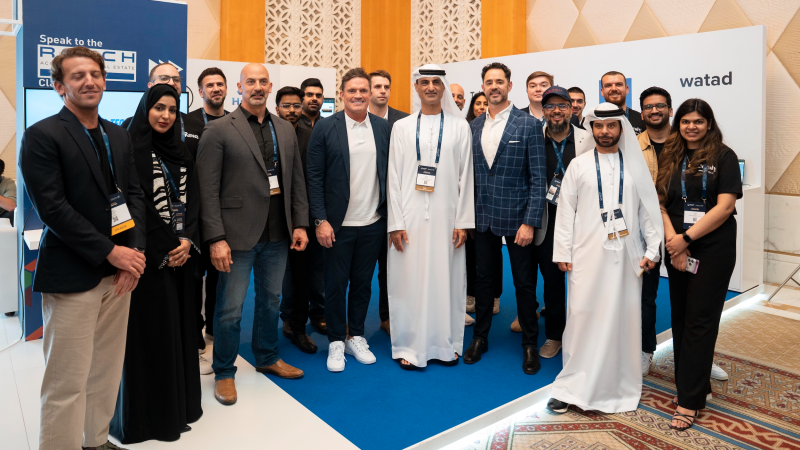
DUBAI, UAE (Feb 12, 2026) With the endorsement and backing of Dubai Land Department (DLD) and Dubai Technology Entrepreneurship Campus (Dtec), Second Century Ventures, the strategic investment arm of the National Association of Realtors® and the world’s most active global real estate technology fund, is proud to announce the start of the 2026 REACH Middle East programme. The inaugural cohort includes innovative proptech companies from the UAE, Saudi Arabia and India, who marked the accelerator’s launch with booth presentations at PropTech Connect, one of the world’s largest real estate exhibitions. The programme has been specifically designed to support the wider goals of the UAE Digital Economy Strategy, the Dubai Economic Agenda (D33), and the Dubai Real Estate Strategy 2033. Supporting regional and international start-ups, REACH will provide a proven framework, financial backing, tailored mentorship, enhanced network and investor access, long-term alumni support and access to a global proptech community. The eight-month accelerator is designed to scale opportunities for the programme cohort and to drive deeper connections among company founders. The initiative is driven by Siddiq Farid and Karim Helal, two leaders with extensive experience in the GCC’s real estate and technology markets. Farid founded the highly successful real estate fractionalisation company, SmartCrowd, while Helal is one of the region’s most recognisable entrepreneurs and a founding board member of the Dubai PropTech Business Council. Majid Al Marri, CEO of Real Estate Registration Sector at Dubai Land Department, commented: “REACH Middle East will directly contribute to the goals of Crown Prince of Dubai, His Highness Sheikh Hamdan bin Mohammed bin Rashid Al Maktoum’s inspiring Real Estate Strategy 2033. The selected start-ups are developing innovative solutions for citizens and residents that will enhance the real estate ecosystem and underline Dubai’s role as a global leader in the property sector.” Siddiq Farid, Managing Director of REACH Middle East, said: “This programme brings together strategic influence and financial support to spur innovation within the real estate sector. With the robust backing of Dubai Land Department and Second Century Ventures, as well as world-class industry mentors, the programme provides our cohort companies with the very best chance of becoming future unicorns.” “The Middle East real estate market, with Dubai as a focal point, has become a hotbed for some of the most innovative minds in technology. The latest expansion of the REACH programme will support exciting new ideas and propel the region’s prop-techs to excel on the global stage,” added Dave Garland, Managing Partner at Second Century Ventures. Hans Henrik Christensen, Vice President and General Manager of Dtec, commented: “We are proud to welcome and support REACH, and provide a collaborative and entrepreneurial environment to stimulate these exciting start-ups.” Companies accepted to the 2026 REACH Middle East programme include: Asano : a real estate development intelligence platform that unifies financial, development and spatial data to improve capital planning across large-scale real estate projects Coraly : an AI-powered growth platform for real estate agencies Fixit : an AI employee solution for real estate sales, helping agencies sell faster and smarter HoloX : creator of digital twins for off-plan real estate sales, transforming complex master plans into interactive 3D experiences Rewa : a platform that turns rental payments into rewarding financial experiences for tenants, while enabling landlords and property managers to collect rent digitally Takeem : a digital rental platform to simplify processes, save upfront fees, pre-qualify tenants and de-risk landlord investments by protecting rental income Watad : an AI-powered building materials procurement platform with embedded finance This is the first expansion of the REACH programme to the Middle East region, part of a global network that has supported more than 300 new businesses worldwide since its establishment in 2019. The programme launch coincided with Dubai’s PropTech Connect 2026, one of the world’s biggest real estate technology conferences and exhibitions, hosted in partnership with Dubai Land Department. Cohort members and REACH partners, as well as 14 global REACH companies exhibited. Visit https://www.nar-reach.com/middle-east for more information.

by Ashley Stinton 19 November 2024
REACH programs now accepting applications across multiple markets to support real estate innovators

by Ane Delsol 8 November 2024
MEXICO (November 08, 2024)- REACH Latam Graduation: On October 23, 2024, REACH Latam proudly celebrated the graduation of its Class of 2024. During the Tech Week event in Mexico City, companies had the opportunity to participate in a panel before showcasing their pitches to a distinguished VC jury.

Show More